Inside the Claims: What "Hygienically Packed" Actually Means at Dakloni Masala
 digitalpressplug@gmail.com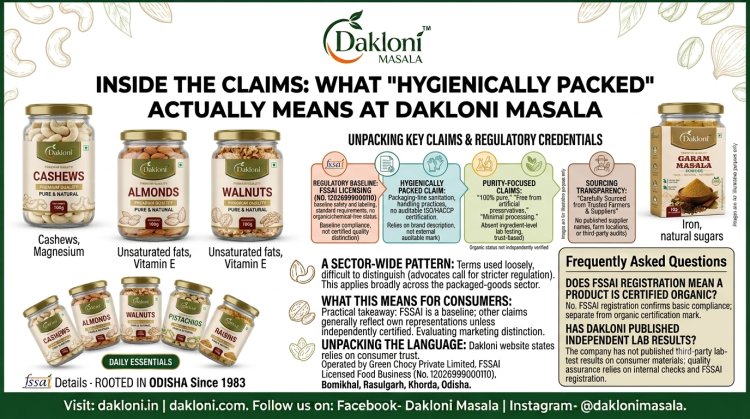
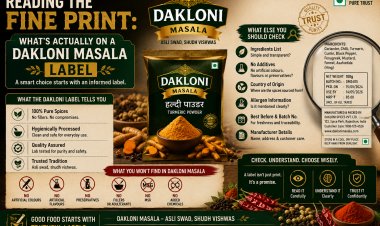
Phrases like "100% pure," "hygienically packed" and "free from artificial preservatives" run throughout the marketing of Dakloni Masala, the Odisha-based spice and dry-fruits brand — language common across India's packaged-food sector but rarely accompanied by the specific evidence needed to independently verify it.
The company, which operates under Green Chocy Private Limited and holds FSSAI license number 12026999000110, points to that registration as its primary regulatory credential. FSSAI licensing confirms that a food business meets baseline safety and labeling requirements set by India's Food Safety and Standards Authority, but it does not certify a product as "organic," "chemical-free" or superior in quality to competitors — distinctions food-policy researchers say are frequently blurred in consumer marketing across the industry, not specific to any one brand.
Unpacking the Language
"Hygienically packed" typically refers to packaging-line sanitation and handling practices rather than a specific, auditable standard with a public certification mark, unless a company separately holds a recognized hygiene or quality certification such as ISO or HACCP, neither of which Dakloni has indicated it holds on its consumer-facing materials. Similarly, "minimal processing" and "free from artificial preservatives" are claims that, absent ingredient-level lab testing made public, rely on consumer trust in the brand's own description.
Dakloni's website states that its Dakloni Masala spices and dry fruits are "carefully sourced from trusted farmers and suppliers," though the company has not published supplier names, farm locations or third-party audit results to substantiate that sourcing claim.
A Sector-Wide Pattern
Consumer-rights advocates in India have periodically called for stricter regulation of purity and quality language in food marketing, arguing that terms like "pure" and "premium" are used loosely across the packaged-goods sector without regulatory definition, making it difficult for consumers to distinguish substantiated claims from marketing language. This pattern is not unique to Dakloni and applies broadly across small and mid-sized Indian food brands operating primarily through direct-to-consumer channels.
What This Means for Consumers
For consumers, the practical takeaway is that FSSAI registration confirms a baseline level of regulatory compliance, while purity, hygiene and health-related claims beyond that baseline generally reflect a company's own representations unless independently certified — a distinction worth understanding when evaluating any spice or food brand's marketing, Dakloni included.
Frequently Asked Questions
Does FSSAI registration mean a product is certified organic?
No. FSSAI registration confirms basic food-safety and labeling compliance; it is separate from organic certification, which requires a distinct certifying body and mark.
Has Dakloni published independent lab results for its purity claims?
The company has not published third-party lab-test results on its consumer-facing materials; its stated quality assurance relies on internal checks and FSSAI registration.
Visit- dakloni.in
Visit- dakloni.com
Facebook- Dakloni Masala
Instagram- @daklonimasala